
hierarchy in terms of the window structure. The small slotted windows are the more intimate spaces but the larger windows, or the square windows, are the common rooms. People don’t really look at a building straight on; they look at it from an angle at all times. So we made the glass of the larger windows flush with the facade of the building itself – so when you look at the building from various angles you see the light catching the reflection of these elements, so it enhances
the ‘flint effect.’We went through several hundred types of bricks with an enthusiasticservation officer. He was very keen – as we were too – to find a brick which
suited the character of the area. So within Norwich you get the greys, the reds, and the kind of blonde sandstone. We looked at getting a colour palette which helped to combine all of those into one brick.
Similarly to Glasgow, and Aberdeen, we’ve taken the older structures and worked hard to find a material that would be sympathetic to the original ma- terials with which the cities were traditionally built. We sourced a brick which reflects not only buildings of the past but is sympathetic to some of the ones in the immediate context, which are more modern. It’s been successful and the feedback from the Council, and The Norwich Society, has been that peo- ple really warm to the brick.
The interior feel is also very important. It should be welcoming, but also en- courage the students to look beyond. Martin Gray was commissioned to
work on a series of photographs, and decided to make a ‘day in the life’ series reflecting the surrounding area, then integrated the artwork within the build- ing. One of the most successful places was in the gallery, as you enter in, and you look up and there are these bold colour images. The images within the entrance foyer space lead the eye through to the oasis, or the landscape be- hind. The integration of quality refurbished Danish furniture to the common area, as well as curated quality original artwork, successfully completes the interior space and becomes an intrinsic part of the overall design. It feels right, doesn’t shout too loud, but has warmth, humour, and inspiration.
There was a lot of consultation between Alumno and the University of the Arts as to their requirements throughout the building. In addition there was consultation with local councillors, the public, Planning Committee and the planners, conservationists, and The Norwich Society. Norwich BID – which is the business organisation within the city – were interested too, and en- couraged by the fact that the students were going to come in and spend their money within the local area. John Lewis as well and the people there
Norwich All Saints Green
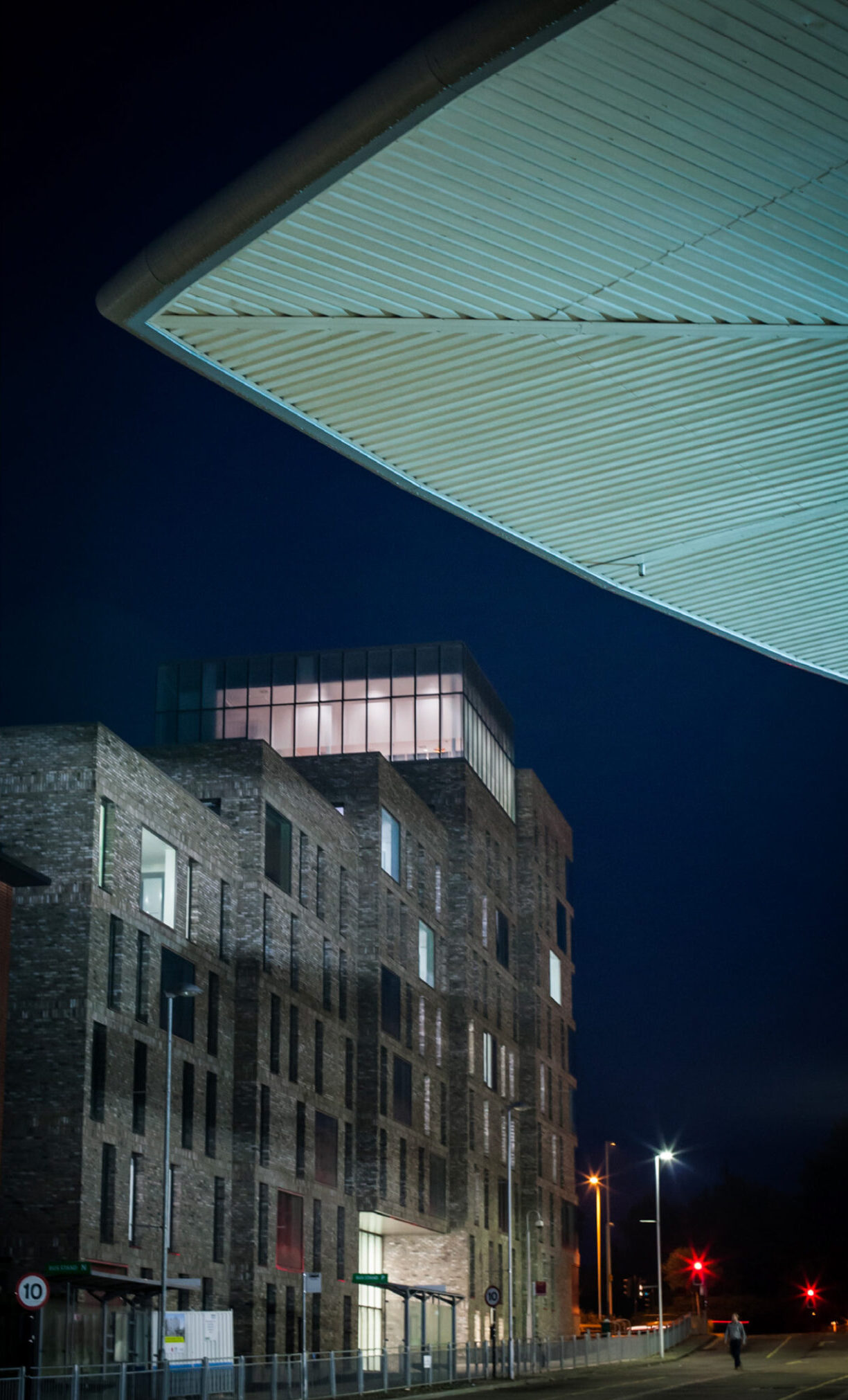
There is a funny story about how the lighthouse came about. One of my local pubs is called The Myddleton Arms, which is named after a guy called Hugh Myddleton who actually built London’s first private water supply after the plague. The new pub landlords found this out and announced (on the very night that Alumno gave us the All Saints Green job to look at) that they were starting Islington’s first Yacht Club, and were going to have a regatta on a two-metre-wide bit of water, with radio-controlled boats. I was sitting to one side, with my sketch book, and inspired by all this talk I decided to create Norwich’s first lighthouse. So the highest point is actually crowned with a glass box which glows at night as a beacon and magnet to the centre of activity at the foot of which is the entrance to the student accommodation. The lighthouse is the main point of focus but also from it you get 360 degree views. It’s an addition to the cityscape and its skyline, which was quite important to us – to have something that added to the skyline, as do the church spires and any civic buildings like the town hall.
For the form of the building we started off with an L-shaped block, just forming a corner. We then stepped the block down towards the YMCA, the lower building toward the east – toward the city. Behind the building we have an oasis, a hidden garden, which is used by the students and has a good amount of light at all times of the day. We worked closely with Clarke Associates and Conisbee – the engineers – to create basically a SuDS (Sustainable Drainage System) system for rain collection.
All these decisions were made in conjunction with Alumno. The green roofs are a reflection of what Alumno wanted us to pursue in terms of a green – ‘eco’ – building. When looking down on the step roofs we didn’t really want to see lots of plant – in terms of mechanical plant – and it is far nicer to look at organic material growing on the roofs.
Rather than keeping it aligned throughout we decided to step the facade. This is predominately reflecting the kind of urban feel you get when walking down the streets, certainly in the older parts of Norwich, where the buildings step in and out, and even cantilever over the street. It helped to break down the overall form of the building which, predominately in functional aspect, is lateral – in terms of the way that the rooms are set out. What we wanted to emphasise was more the verticality, and break down the scale as well. In doing that we looked at the window types and, rather than stacking the common rooms, it was better to have them at varying places through out the whole facade. Though quite abstract, it was a definite take on the flint walls you get in Norwich, Norfolk and beyond, where the sun actually catches – when it’s out – the glint of the flint randomly across the walls. One of the things we wanted to do with these ‘random windows’ was have a
hierarchy in terms of the window structure. The small slotted windows are the more intimate spaces but the larger windows, or the square windows, are the common rooms.
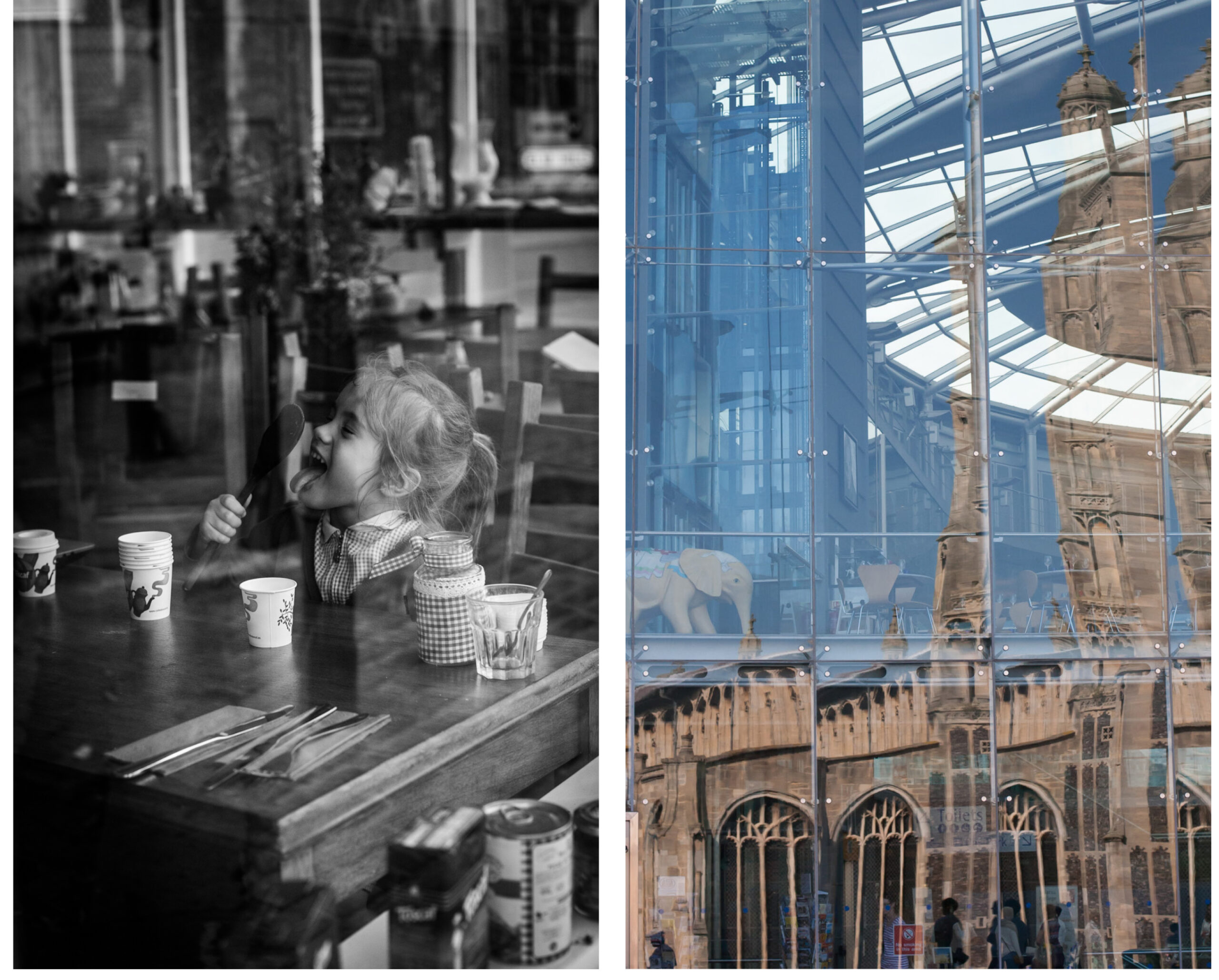
People don’t really look at a building straight on; they look at it from an angle at all times. So we made the glass of the larger windows flush with the facade of the building itself – so when you look at the building from various angles you see the light catching the reflection of these elements, so it enhances the ‘flint effect.’
We went through several hundred types of bricks with an enthusiastic conservation officer. He was very keen – as we were too – to find a brick which suited the character of the area. So within Norwich you get the greys, the reds, and the kind of blonde sandstone. We looked at getting a colour palette which helped to combine all of those into one brick.
Similarly to Glasgow, and Aberdeen, we’ve taken the older structures and worked hard to find a material that would be sympathetic to the original ma- terials with which the cities were traditionally built. We sourced a brick which reflects not only buildings of the past but is sympathetic to some of the ones in the immediate context, which are more modern. It’s been successful and the feedback from the Council, and The Norwich Society, has been that people really warm to the brick.
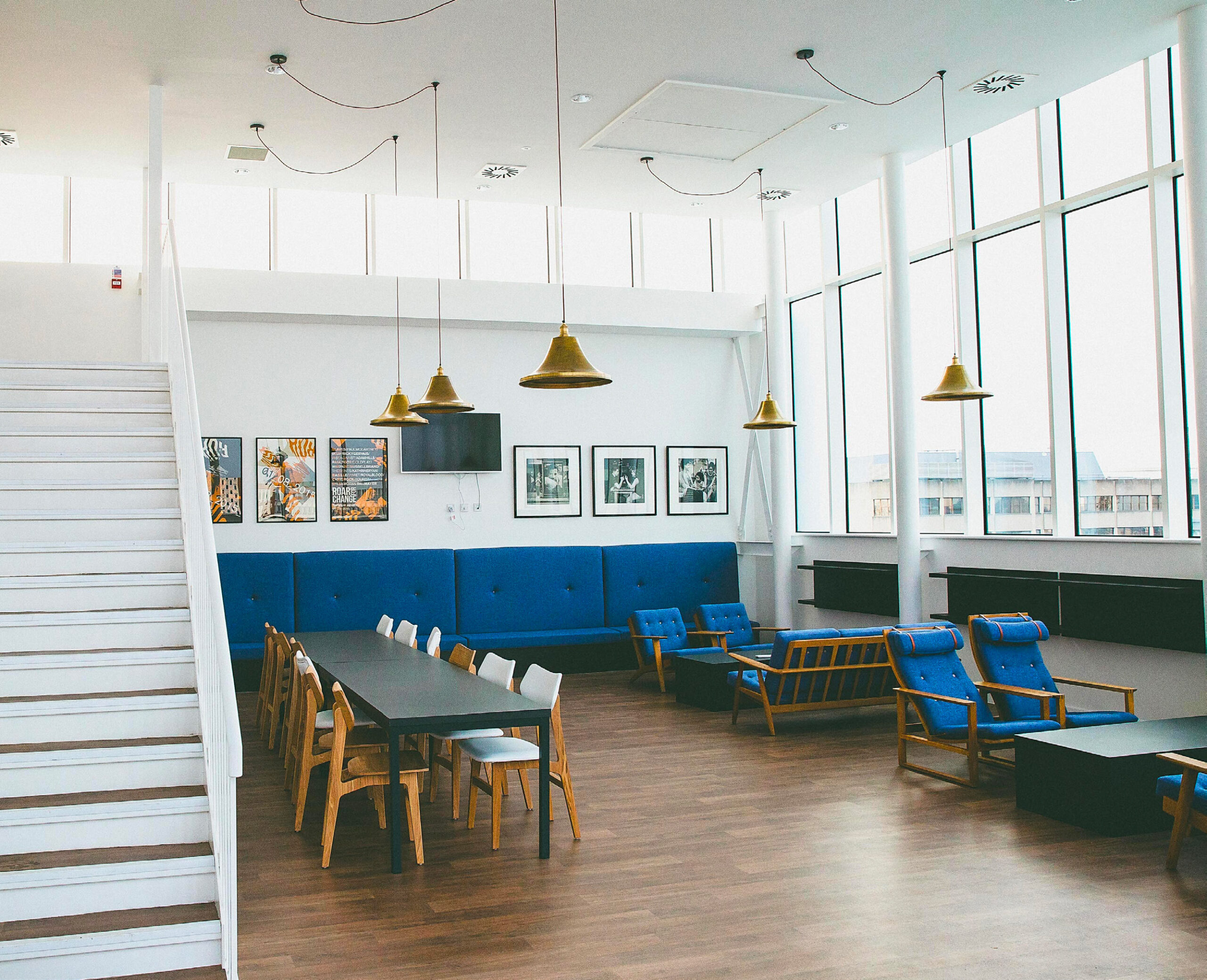
The interior feel is also very important. It should be welcoming, but also encourage the students to look beyond. Martin Gray was commissioned to work on a series of photographs, and decided to make a ‘day in the life’ series reflecting the surrounding area, then integrated the artwork within the build- ing. One of the most successful places was in the gallery, as you enter in, and you look up and there are these bold colour images. The images within the entrance foyer space lead the eye through to the oasis, or the landscape be- hind. The integration of quality refurbished Danish furniture to the common area, as well as curated quality original artwork, successfully completes the interior space and becomes an intrinsic part of the overall design. It feels right, doesn’t shout too loud, but has warmth, humour, and inspiration.
There was a lot of consultation between Alumno and the University of the Arts as to their requirements throughout the building. In addition there was consultation with local councillors, the public, Planning Committee and the planners, conservationists, and The Norwich Society. Norwich BID – which is the business organisation within the city – were interested too, and en- couraged by the fact that the students were going to come in and spend their money within the local area. John Lewis as well and the people there
were also consulted and, interestingly enough, I was asked by one mem- ber of John Lewis whether having these large windows would require blinds or curtains etc. I responded that we’d heard that the Bedding department would do well and if maybe you’re from the Blinds department, I can assure you that maybe you also will benefit from the building of this building.
Alumno struck up an interesting relationship with Brompton Bike Hire to cre- ate a Brompton ‘Dock’ point where you can rent bicycles. It’s not just for the students, it’s also for locals and people arriving in the city centre, and is locat- ed next to the bus station.
What has become the café, gallery, and yoga studio was all part of the site that was owned by the city council. Alumno could have just taken the corner site, but they fell in love with this particular building and saw an opportunity to restore it. It used to be an old dairy and, in its time, was also a dance studio where famous dancers trained. Water had managed to get in and the interiors of the building had been quite badly damaged.
The opportunity was here to restore a building that would create a sense of community, and also enhance the setting and entry from All Saints Green. When walking down All Saints Green, the pavement felt very nar- row – you wanted to run past it because of the cars screeching up and down. Here was a chance to do some placemaking. To create a space which not only gave the hidden building an enhanced setting, but actually created a bit of relief as you walked along the All Saints Green – a public open space where, in summer, people could sit out and have a sandwich or read a book.
The yoga studio fell in love with the building and saw an opportunity – which was quite in tune with the previous use – to create a space of contemplation for yoga, but also a community café. The café has become very well used by locals and visitors alike, and students too. It is a place where local artists and students can exhibit some of their artwork. So it’s encouraging people to mix and is giving something to an area which was a forgotten part of cen- tral Norwich; it was on the Buildings At Risk register. The work Alumno, and ourselves, did was acknowledged by The Norwich Society with an award for renovation of an existing building.
Norwich All Saints Green
City ManagerI’m originally from London but came here in 2000. I’ve fallen in love with Norwich and want to pass that on. I say to the students that it’s one of the UK’s best kept secrets. All Saints Green is less multinational and multicultural than some halls, so even though there is a multinational element, many of the students are from other parts of the UK. I can help them to settle and give them the benefit of my knowledge about the community.
Once you’ve got the Norfolk bug that’s it, it will get you. What is quite nice is that everyone kind of knows everyone and everything, but not so it’s too in your pocket, if that makes sense? It’s a very welcoming city with a quirky character. When people found out about All Saints Green being built there was a lot of buzz about it. If I meet people that don’t really know me and they say, ‘What do I do?’ and I say, ‘I manage the student accommodation down by the bus station.’ They know it and smile.
Alumno have also restored the beautiful but derelict old building behind, which has also played a big part in regenerating this area. There’s a cafe which sells really good healthy food, a gallery space and a yoga studio up top. There’s nothing else like it in Norwich and it’s really popular. They’ve actually brought people to a part of Norwich where people wouldn’t have previously come. It was sort of a dead bit of the city centre. As I said, the thing about Norwich is that everyone kind of knows each other. So if things are good you’ll be respect- ed and popular, but if you get something wrong the word will travel fast.
We are the official Norwich University of the Arts accommodation for their first years. So we’ve got a really good working relationship with the University and direct links regarding how the students are doing.
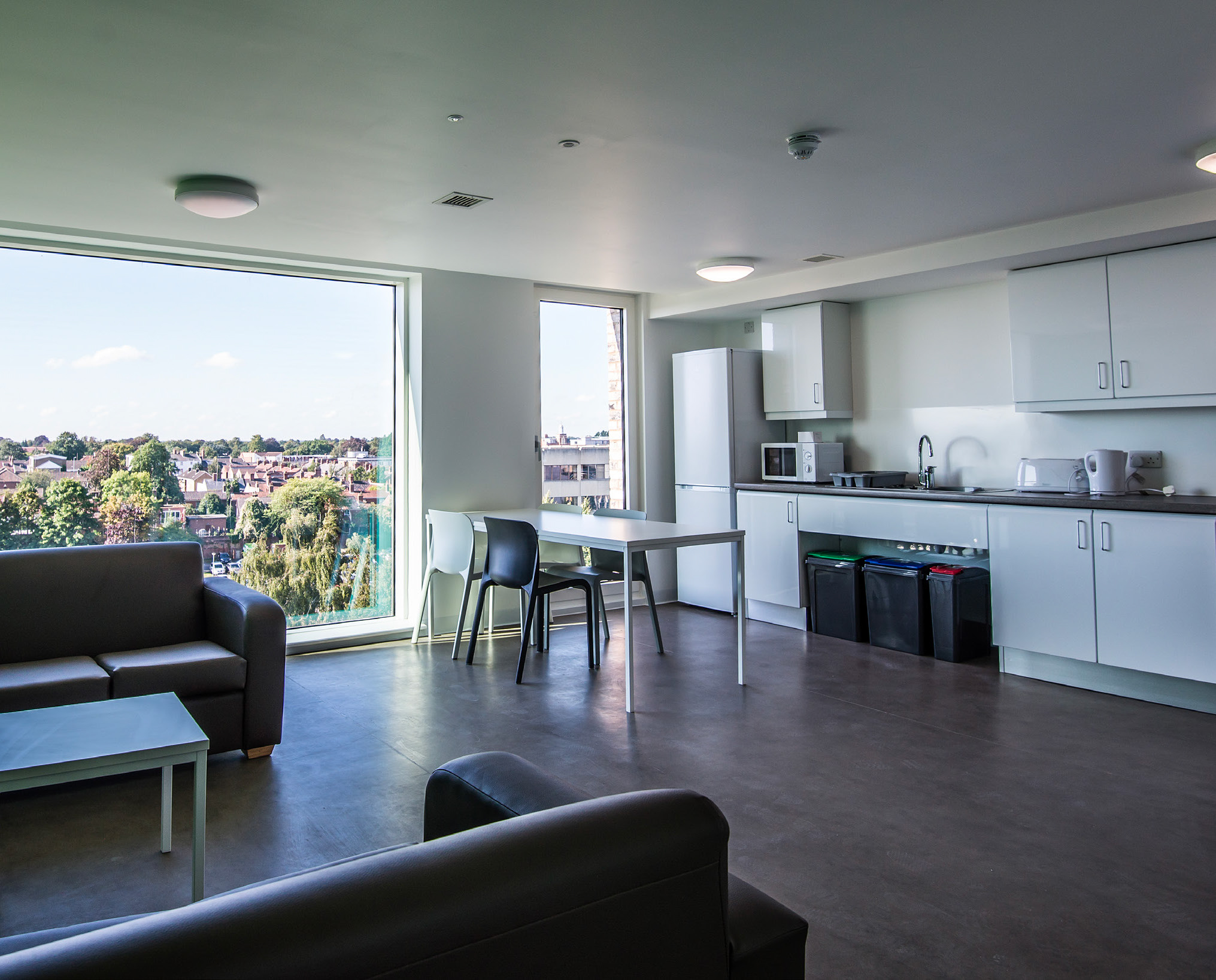
Some students prefer smaller flat clusters, some prefer larger ones – but they’re all very well lit, nice and spacious. The corridors are nice and open too. I’ve been to some student accommodation that is really narrow but they’ve been really generous with the width of them.
When it comes towards exam time the common rooms get particularly busy. The lighthouse common room at the top is a great space with the high ceiling,

Norwich All Saints Green
panoramic views and the little library. The library is actually created from the staff here. We’ve got a few family members that work in the local library; when they have their annual regeneration of books we started building from that.
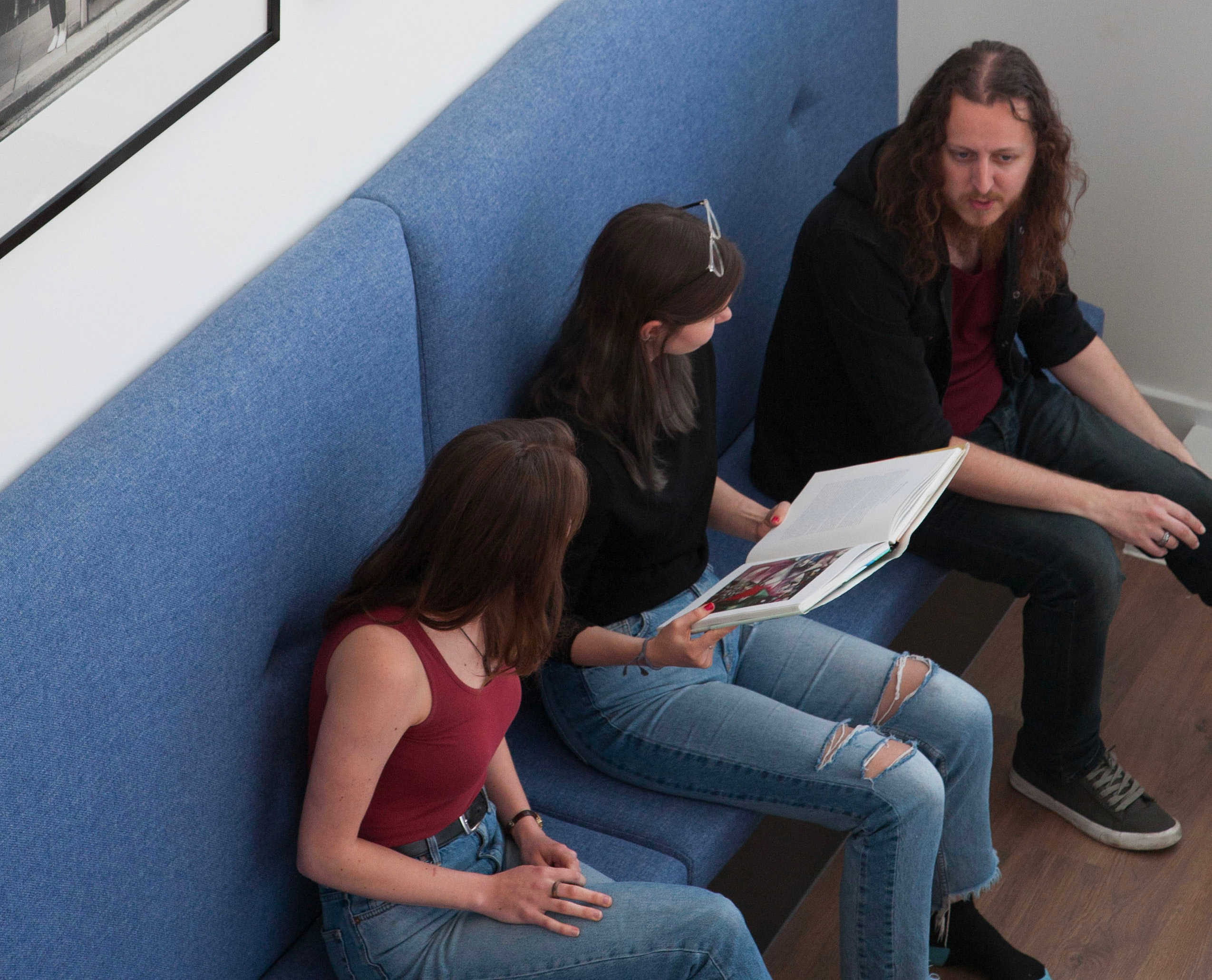
There are big tables and you can just lay things out and have group meet- ings. There are also beautiful, comfortable, easy chairs and sofas. The art- work also works well. It really helps add to the atmosphere. The photographs draw your eye in. Some students have come and said they can relate to them. Some even recognise specific people, as well as places.
All the students here are first years, but it’s not like they’re all the same age. For a lot of them though it’s their first step from being with their parents. This is kind of learning curve for them; an entry way in.
The staff’s ethos is that we are working in their home. When they come and talk to us about any kind of issues, we really try to help. It really does vary, be- cause they’ve come from different backgrounds and are at different stages in their journey. We’ve had students that have arrived that haven’t known how to use a washing machine or haven’t known basic cooking skills. We have to be really mindful of that because it can occasionally cause an issue if you have a student that might say, ‘Dave never washes up!’ Well, Dave might not have been shown how to wash up before.
Norwich Council is really progressive with encouraging students to live in areas of the city centre that benefit. They are trying to manage student ac- commodation in a way which improves the life for the whole city, helping to reduce the numbers of students in residential areas – and the very high proportion of absentee landlord HMO properties – and turn them back into balanced communities with more working people and families.
Illustration
Norwich University of the Arts
I’ve applied for the Erasmus student exchange programme to study abroad for one academic year and hope to be accepted by the Vilnius Academy of Arts in Lithuania. It has a strong reputation and would allow me to continue with printmaking, but also experiment with ceramics; an area I’d like to develop. Illustration is anything that conveys a narrative, so you can pretty much do anything as long as you achieve that. It will be a lot to take on but definitely worth it, as I want to immerse myself in a new culture as well as develop my practice. I’m also interested in history and methodology. Primarily I want to experiment and see where it takes me. Who knows? I might end up making mugs.

I came to All Saints Green straight from living at home and doubt I would have risked going for Erasmus if I hadn’t come here and had such a good experience. I like discovering Norwich with friends like Isabelle, from our flat. It’s a beautiful historic city, with loads of great independent shops, cafes, parks and gardens.
I’m really interested in horticulture and botanical illustration, and did a lot before this course. Trying to incorporate it into specific briefs is quite difficult, but I enjoy the challenge
IllustrationThe feedback I get on this course is excellent, so criticism is very constructive, especially when my work doesn’t quite convey what I want it to say. The briefs are usually different to anything I would have given myself; I feel stretched, inspired and engaged within a collaborative process.
When you’re inexperienced and really only seeking opinions from friends, or people you meet randomly online, it can make progress a
lot harder. I’m a mature student, so believe me, I’ve been there. I can already see how I can develop a career in a much less naive and haphazard way than before; when I balanced a job in a café with attempts to build a folio and sell my work online, or at market stalls.
We are also starting to learn more about the wider creative industries. How you can get commissions and how to deal with them if you get them. Developing your craft, then knowing your own worth. I love ink and watercolour, but since coming here I’ve really got into lino and mono printing.
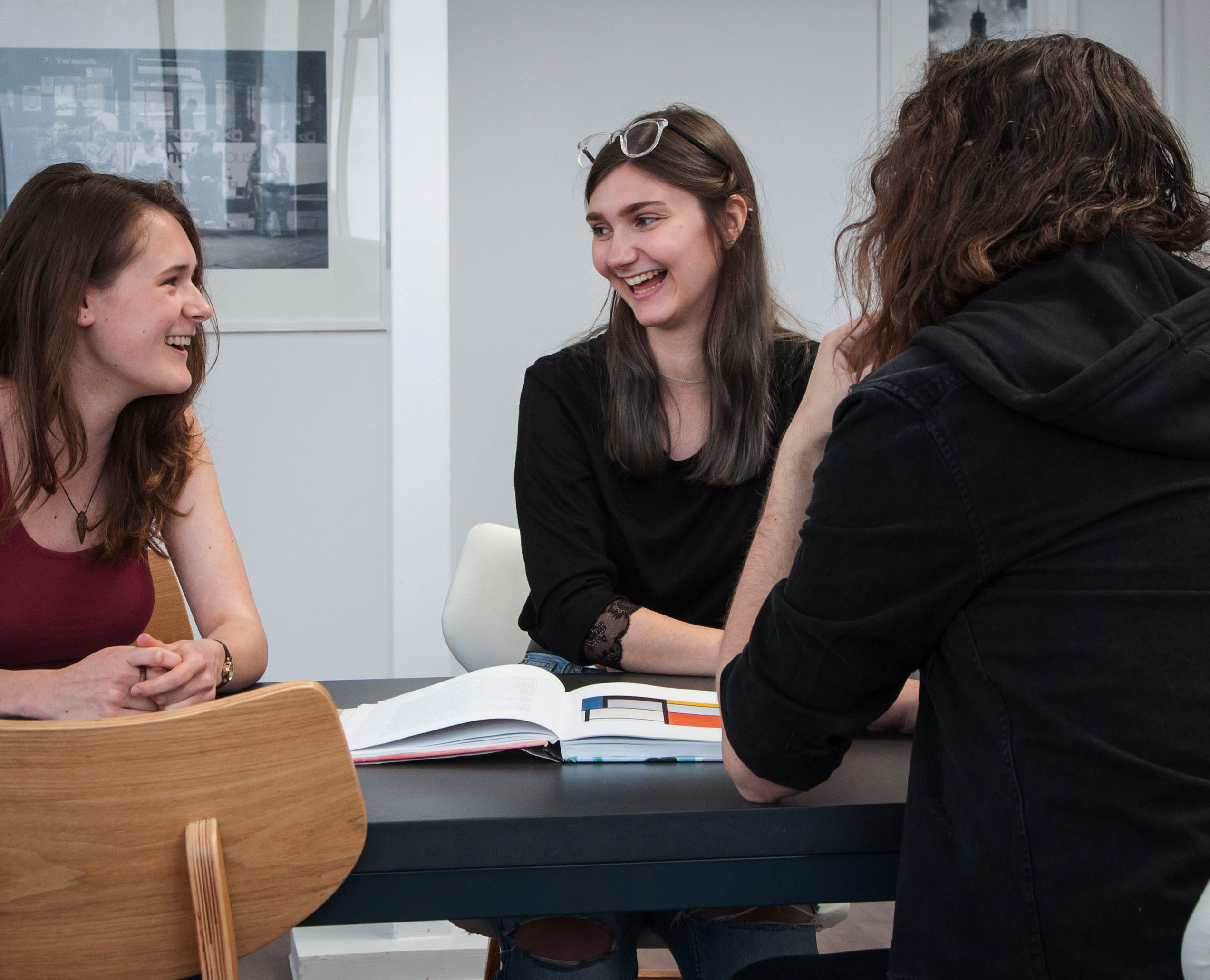
I live in a flat of eleven students, which has worked out remarkably well. Seven of us are going to rent a big private house together after this academic year, and we’re taking on two from the floor below. We’re all really close friends now and know what it’s like to live with each other, so feel ready for the next adventure.
Norwich All Saints Green
Photography Student
Norwich University of the Arts
I’m a country girl, from a village in the middle of nowhere, so I’m more used to horses and dogs than city living.
I always wanted to go into the army, because my Dad was in the army, but I had to have an operation on my spine so couldn’t pass the medical. When I was choosing my A-levels my Mum said, ‘Just focus on anything you enjoy.’ So I did English Literature, Sports Science, Musical Theatre and Photography. I never thought I would go to university until I took Photography, then I thought, actually I really like this.
I’m particularly interested in travel photography. I lived in Zambia for a couple of months before I came to Uni, which has inspired me to travel as widely as possible, documenting landscapes and cultures. This course covers a wide range of disciplines and the tutors are very good. Every brief includes an essay – contextualising our research and practice.
I live a couple of hours away so I hoped I’d have a good chance of getting into All Saints Green, as it was my first choice. At first they emailed me and said I’d got into my course but not here, but someone dropped out so thankfully I managed to get it. I live in a flat of nine and whenever we go out we all go out together. I was dreading coming to Uni thinking I wouldn’t get on with anyone, but I’ve been really lucky. I also like to go out to the countryside with my camera. It’s not quite a faraway land, but it’s a start.

Norwich All Saints Green
Animation StudentI’ve wanted to do animation for as long as I can remember. I even geared my school subjects in that direction as early as possible, so was thrilled to be accepted on this course, and so far feel it definitely deserves the high reputation. At the moment I’m working between 2D and 3D, creating environments for film and video games, with an emphasis on collaborative projects and joint presentations.
This is the first time I’ve lived away from home, and I chose All Saints Green over the other student accommodation as it’s just so lovely. Obviously there’s private rental as well, but I’d never been to Norwich before. So it’s been much easier to meet and befriend a wide variety of people here, than if I’d been in a back room of some landlord’s house or even a shared flat in another part of town. I also feel really safe here, which was particularly important when I first arrived. I really like the common areas. They’re so open and have a special quality, with a stunning panoramic view over the whole city from the ‘lighthouse’ one above our flat.
I’ve been interested in food from when I was really young, so cooked for myself as soon as I arrived, then shared some with my flatmates, which evolved into occasional cook-ups. There’s one guy from Hong Kong. He’s lovely and makes amazing Chinese food. So we learn from each other, which is really good.
I feel this year has prepared me for future moves – in a safe and comfortable environment – where I’ve made the friends I plan to share private accommodation with, rather than being thrown into it straight from living at home.
I’m only in first year, so specific plans for the future are still quite loose. I’d like to stay in the UK, but the majority of jobs in TV and film animation are in America. There are, however, already more opportunities here than there used to be, so we’ll see how that develops.

Games Art and Design Student
Norwich University of the Arts
I left school at eighteen, applied to come to Norwich and was accepted. Unfortunately my family circumstances became very difficult; I ended up staying in Dorset and getting a job, to try and help out. I eventually moved out of the family home a number of years later but was trapped in jobs I didn’t like, where my earnings only just covered my living costs. Pretty much all my spare time was spent drawing.
Not many people do this specific course as most focus on the programming side. So I thought, ‘I’ll get a student loan and re-apply.’ Thankfully I was accepted again, ten years later than the first time.
I’ve known for so long that this is where I want to be, but in some ways I’m better off coming now than I would have been back then, as the technology they’re using is much more advanced. People have actually had to relearn so much to keep up with the huge technological leaps over the last decade.
All this time I’ve wanted to put my creativity to some purpose. All this time I’ve been creating this artwork, thinking, wouldn’t it be great to use it in a game? Now we’re learning how. It’s really satisfying; I can see my drawings coming to life.
Once a week guest lecturers come from professional practice; a lot of them used to be students here. One of the main reasons I wanted to come is because there’s such a high success rate of graduates who got into the industry, and the course has become very highly respected. It’s won a lot of awards, and is now regarded as one of the top in Europe.
I chose All Saints Green, as I thought it’s going to be secure, till I get a foot- hold in the city. I was nervous at first about the idea of sharing a flat with five others where everything and everyone is new, but within a few days people are socialising. The staff are great as well. I particularly like relaxing in the downstairs common room, looking onto the garden, or I’ll go out and sit on the benches if the weather’s good. It’s so peaceful, you wouldn’t know you were in a city centre with a bus station on the other side of the building. Living here is lovely, but a big change for me as I’m from a really little town; literally just two roads. Norwich is actually quite a small city, but for me it’s huge.

Textiles StudentI did my Art Foundation Course at Brighton School of Art. The Art School has a good reputation, but I wanted to broaden my horizons. Norwich was the perfect city as a first step. It’s very contained, and looks gorgeous, with a nice relaxed pace.
While I was away on my gap year I decided that the one discipline I couldn’t stop thinking about was textiles. Everywhere around me I saw pattern, repeats, and was interested in every fabric I came across. I really wanted to do a course that would teach me more about the most traditional forms of design and develop my skills in weaving, knitting, and printing.
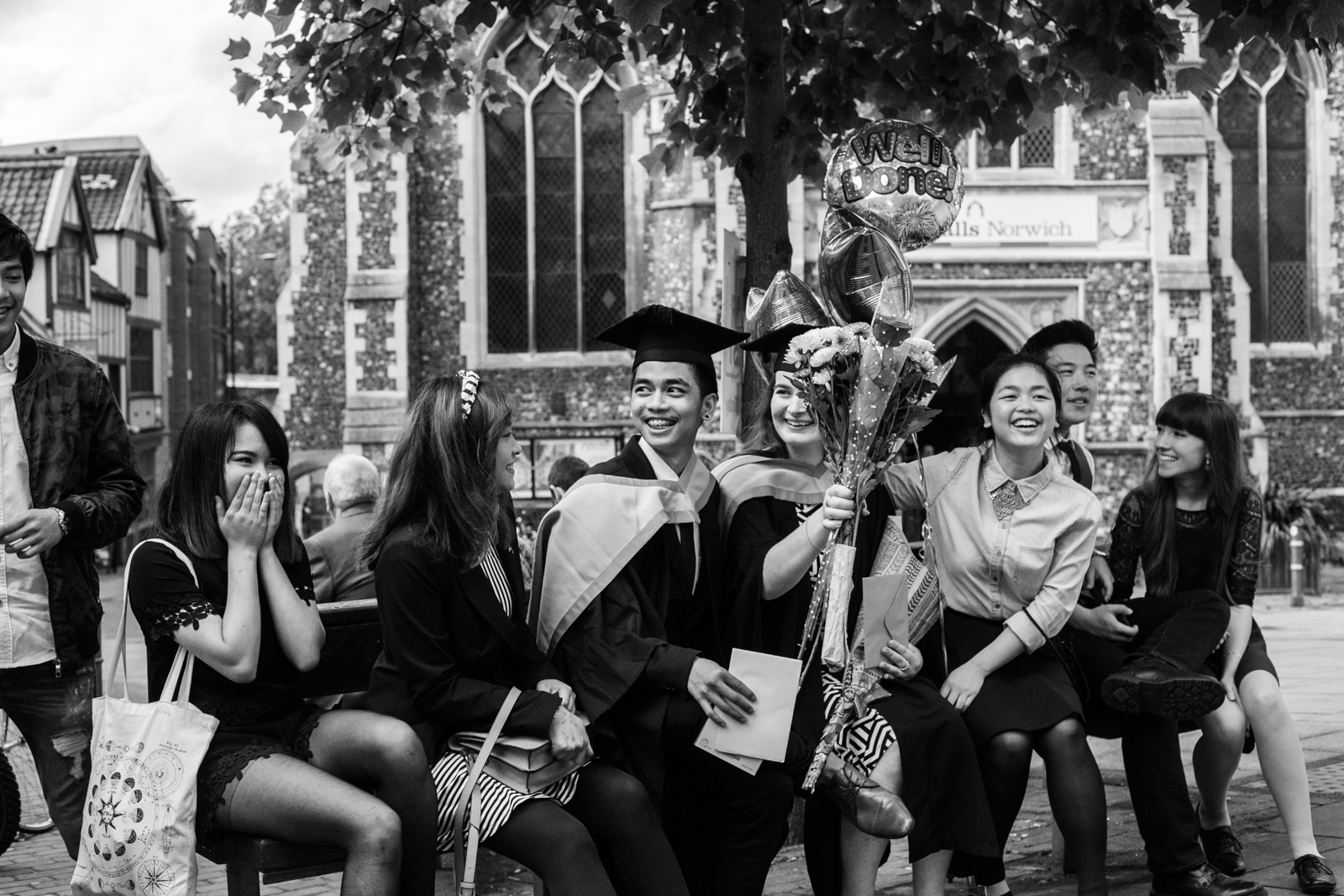
Myself and Cerys are flatmates and have become friends. We share with a Californian and a guy from Israel. It’s great to have the mixture. We even join in with traditional celebrations, like Thanksgiving and Hanukkah.
Norwich All Saints Green
We use cookies to improve your experience on our site. By using our site, you consent to cookies.
Manage your cookie preferences below:
Essential cookies enable basic functions and are necessary for the proper function of the website.
These cookies are needed for adding comments on this website.