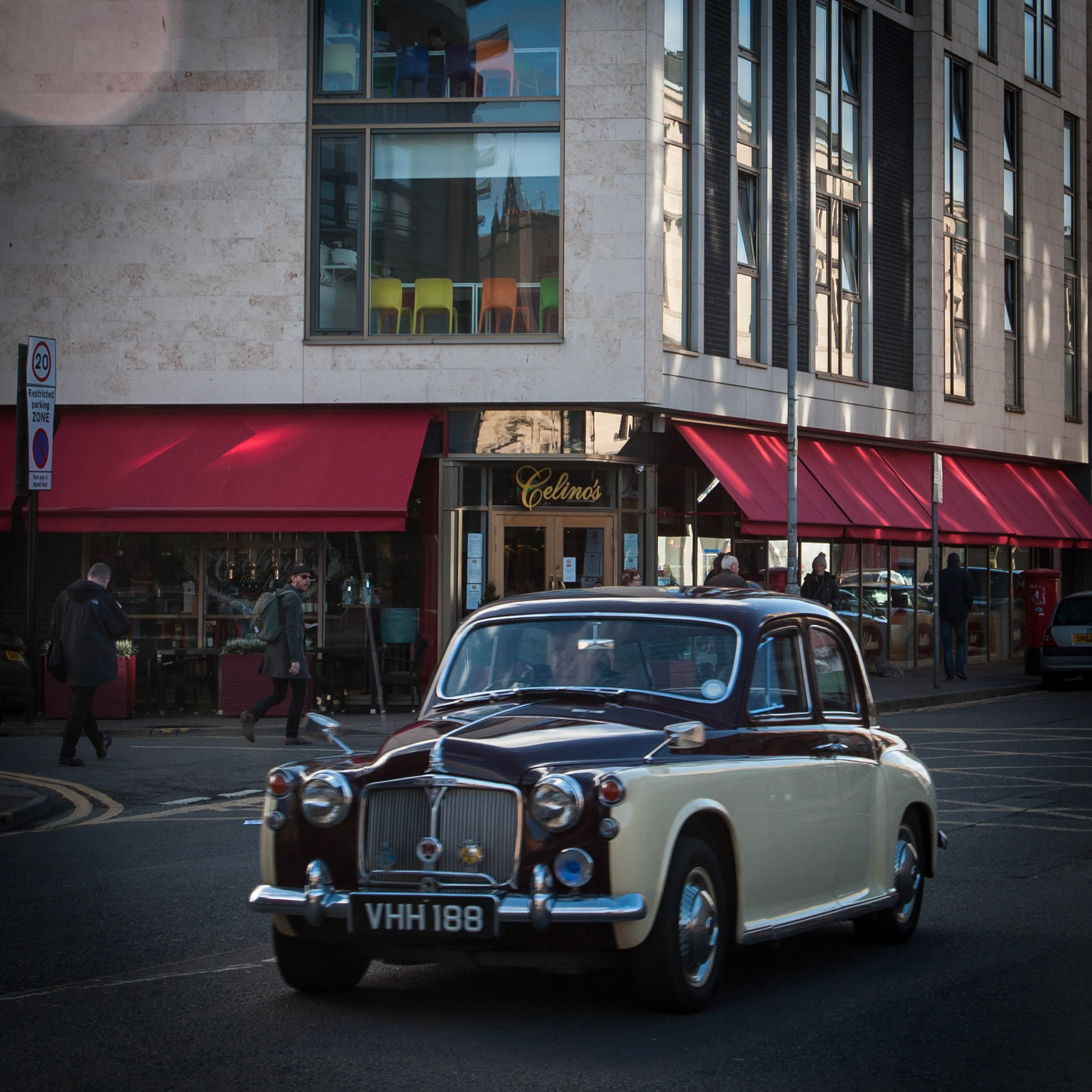

The development of Hyndland House initially began with an introduction to the site, which we presented to Alumno as an opportunity to build very close to Glasgow University, right in the heart of Dumbarton Road. The site was very run down, housing a defunct, two storey electrical goods facility within a building that almost resembled an old electricity substation. It added nothing to its surroundings and was instead regarded by most people as a blot on the landscape.
Partick was originally a village until the Victorian tenemental infrastructure was then implemented along Dumbarton Road, up into Dowanhill and Hill- head, toward the University itself. The area then declined, particularly in the mid 20th century, to the point that it had become a kind of missing tooth. Since then the West End has evolved a lot with that particular part of Dumbarton Road and Hyndland Street becoming a sort of extension of Byres Road; very much an addition to what’s perceived as West End, even one of its more exciting flag bearers. A multicultural, more bohemian atmosphere has been increasingly prevalent in recent decades, very much connected to university life, but still missing buildings that would further enhance that connectivity.
Parts of the West End are renowned for a lot of student HMOs within Victorian tenement buildings. Many of these were beautifully designed as quite grand flats, but badly neglected over many decades, particularly during the latter half of the twentieth century, being bought up by absentee landlords to rent out to mainly students and DHSS tenants.
One of the main reasons for promoting a development for students in this particular area was to take students out of HMOs, in existing tenement buildings, in an area which is in high demand for families and young professionals. This would only be possible if managed student accommodation was avail- able at affordable rent.
Since the process of designing and building Hyndland House began other developments have appeared within the area. The difference was that David Campbell, at Alumno, was insistent that they get nominations with the university, which they successfully achieved, so more than half of the students living in the building are from Glasgow University on recommendation. The rent competes very well with other developments, and are lower than others in the vicinity, which tend to be much larger complexes with up to 600 student rooms a piece.
Glasgow Hyndland House
Hyndland House sits comfortably, within the tenemental structure, over- looking a square, and is designed to be very much part of the community. It was basically a modern interpretation of tenement blocks. If you look down Hyndland Street you get these stepping tenements gently de- scending towards Dumbarton Road. Hyndland House is at a pivotal point at the bottom.
An increasing number of high quality independent businesses, including cafe restaurants, delicatessens, artisan shops and galleries have opened on the ground floors of these stepping tenements, so the building was seen as a continuation of that. It was clear we had to develop a mixed- use proposal with a large retail unit. This is unusual for Dumbarton Road because a lot of the retail units tend to be very narrow and deep. This was an opportunity to create a landmark in terms of both accommodation and the best of retail. This big unit is operating as a very successful Italian cafe, deli and restaurant. This is a high quality family-run business adding to the city square surrounding Mansfield Park.
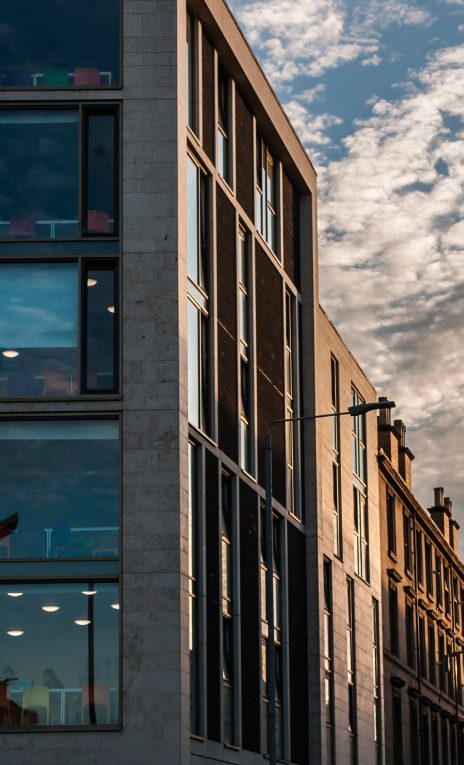
The building as a whole mirrors the surroundings, whilst having a form and modernity of its own. It links in to the tenements and the predominantly traditional Glasgow Victoriana around it. In materiality terms we introduced a stone facade at nearly the same price as a brick facade. The nice thing about the predominantly Victorian West End is that you get the blonde and the red sandstone and we wanted to mix those elements.
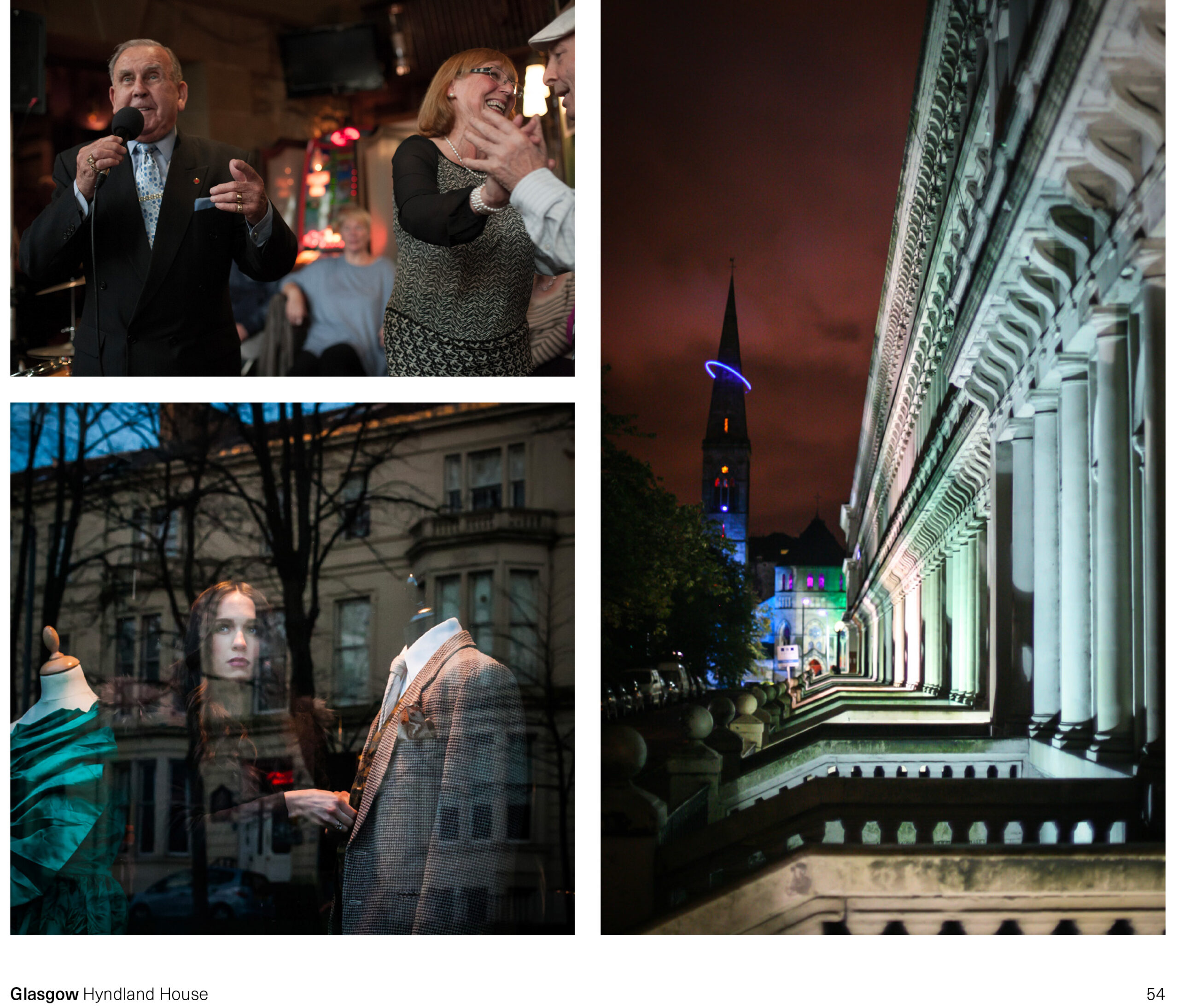
We also have the celebration of the bay window and the living rooms. There is a kind of hierarchy within tenemental structures, so you can read where there are living rooms and where there are more intimate spaces like bedrooms. So there was a language to the building. We were insistent on having an interesting active corner, shared by the students within and addressing the two main vistas, one looking east along Dumbarton Road and one looking up Hyndland Street. It also gave activity that could be seen within; especially at night when one travels along Dumbarton Road or down Hyndland Street.
I think that corner has been a very important part of the design, also the step- ping of the building down towards the lower, smaller scale, houses toward the rear; at the south of the site. We’ve been very careful to be sensitive to- wards this residential area at the back of the building and worked very closely with the planners to achieve that acceptable stepping solution which also allows views towards the south as you climb up the building. We also saw those glazed corridors as viewing positions through the building, likened to the hen run in Charles Rennie Mackintosh’s Art School. You do get some superb views from corridors.
.
The main entrance is at Keith Street rather than place it on the main busy thoroughfare. We also created a courtyard which the students could share with one another, with allotment-type bedding, and that gives a nice aspect from the rooms that look onto it at the back. At the front there are stunning views from the shared kitchen and living rooms across the topography of the West End. One of the things that we also looked at, rather than creating a monolithic block, was dividing the blocks up in not only stepping forms but what we called open and closed boxes.
The ends are like skeletal frames in-filled with brick, or you get the side of the box, which is solid stone. You get this change, as you move round the building, of open and closed situations. The colour change was directly related to the colour changes that you get within blocks of the tenements but reinterpreting that in a more modern idiom. We wanted longevity as part of the skyline.
Throughout every stage of the process we worked very closely with Alumno. Alumno also worked closely with the University to establish what kind of clusters the University would prefer to have their students living in. Alumno very much tried to work out what was really best for the University, and best for the students as well as the local environment and community.
We were able to create varying sizes of clusters throughout the building, sharing a common space which has a kitchen, dining and seating area. These vary in size, from ten, to five, then more intimate clusters of three, as well as studio accommodation with everything self contained. There’s something to fulfil every need and every age group and culture. Some students like to be in a larger cluster and some prefer a smaller. Also, within the building we colour coded the clusters so there was a bit of fun.
We made sure that every cluster has at least one area where the students benefit from a view and a sense of connecting with the city that surrounds them. At the ground floor we created a large common room overlooking the gardens.
The stonework works beautifully and will continue to wear well over time. It’s very robust. Unlike many modern buildings the patina is actually im- proving and that’s something we’ve taken very much into consideration for the longevity; having worked with housing associations and taken a similar approach. Alumno are committed to long term sustainability and the im- portance of using robust materials, that have low maintenance issues, but also look good and age well. It’s very much about placemaking and adding value to the city.
The combination of the glazing and the stone comes to life in different ways at different times of the day. In the evening, it fits with the profile of the buildings, which are silhouetted as the sun sets. In the morning you can see the tenements opposite reflected in the large glazed area linking to the stone.
It had to be quite a strong design in the sense that it’s working within a Victorian tenemental structure. They’re very large, ornate, solid, grand buildings built by different developers. It follows a theme but brings it into the 21st century.
There was a very strong ethos from Alumno’s side to create a building which was environmentally eco-friendly, so we chose specific elements such as the green roofs and the photovoltaic cells.
Alumno also wanted to incorporate very efficient heating systems within the building, heat reclaim systems as well to reduce the running costs, and then of course good insulation and good sound insulation – to create an eco-friendly environment for the students to live in.
There were also some interesting structural challenges. An example being that we had to work very closely with Strathclyde Passenger Transport be- cause the third oldest underground in the world basically goes down the middle of Dumbarton Road parallel to the building. We had to monitor the tunnels 24/7 as the structural engineers came up with a suitable solution, so we could build the foundations for the building in a way that didn’t interfere with the tunnel structures. Also, in the process of clearing the site, we found a mine shaft which had to be carefully grouted and filled with concrete.
The living spaces are specifically placed to read with some of the views, taking on board the best views from the building. We also spread them throughout the building so they’re not all just at one end. In the ground floor we’ve got higher ceilings. That was to do with mainly creating a kind of plinth base along the base of the building which then has the rest of the building hanging above.
It also gives it a sense of grandeur as you enter into the building.
The fixtures, fittings and art works were high quality, with stylish, but robust, mid-century Danish furniture, which has been revamped and re-upholstered. We installed low energy lamps throughout, so there is LED lighting which, again, reduces the running costs. We are able to offer the students a very good value accommodation but a sense of luxury and design.
We wanted to give the students floor to ceiling windows as well. This helps create a feeling of more space within rooms, and also engages with the community, rather than being hidden away. This is integral to the stu- dents getting to know the city they’re studying in; something they can take on through all their lives. A view encourages the students to go and interact with the outside world.
Project
New build on brownfield site
Location
Dumbarton Road, Glasgow
Architects
Carson & Partners
Completed
2014
Glasgow Hyndland House
Scheme Manager I’m originally from West London, but I did both my Undergraduate and Masters in social anthropology at Queens University, Belfast. I wanted a different experience from where I’d grown up. Sometimes it’s too easy to get caught up in the whole London thing and you don’t venture outside it enough.
Throughout my studies I had a part time job in a hotel. It was nice to meet people from all round the world and showcase the Belfast I had discovered, so I kind of developed a bit of a passion for hospitality. When I finished my Masters I was offered a full time position.
I got a job opportunity with Prada, in Glasgow, so moved here; but after a few years I decided this wasn’t the right direction for me, but I loved Glasgow. So I left the job, but stayed in the city, then decided on a career in student accommodation and I truly think it would be hard to find a better example of it than Hyndland House. I love my job. The core of this work is people and the way they function and communicate, so I feel I can apply my degrees in practice.
Many of the students are newly living away from home. Some have just turned eighteen and are embarking on not only a new course, but also a new city, a new country and culture, whilst studying in their second, third or even fourth language. There’s a lot of pressure on them, but we don’t want them to be frightened of the outside world as that is part of their broader education.Glasgow should be the foundation of their experience; with the West End and Partick in particular as their immediate community.
There are an increasing number of exciting new restaurants, great little cafes, boutique shops, yummy mummies, pop up galleries and hipsters patrolling around here. That used to be more of a Byres Road thing, but it seems to have filtered into Partick, Yorkhill and Finnieston. Gentrification is a good thing in some ways, but this is a still where a lot of proud hard working people have been born and brought up, when things were very different, so any changes have to respect that and them. We don’t want to be a seen as a hindrance to the area but an asset.
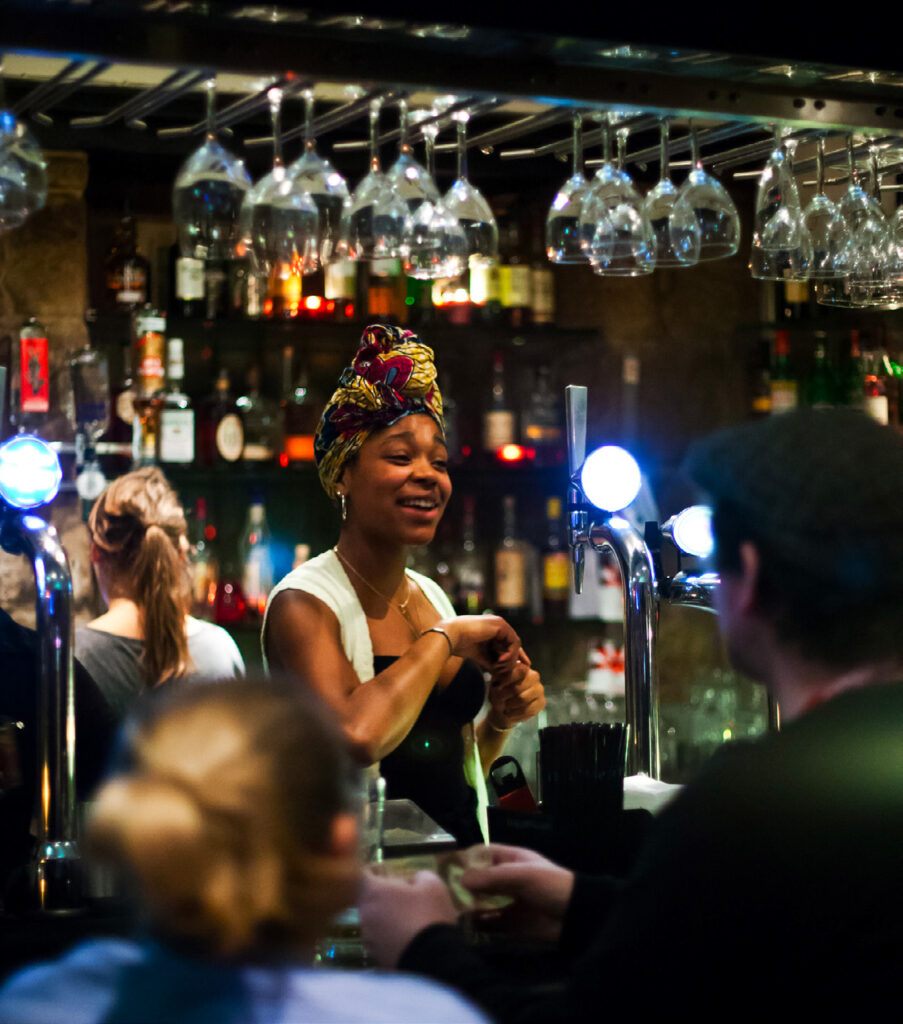
I decided to go and visit local businesses to create a loyalty scheme specif- ically for Hyndland House students. So we now have a loyalty discount card called ‘Unlock the Neighbourhood.’ It’s a way to encourage the students to live like locals in an established residential area, adding to the local economy, and increasingly cosmopolitan feel of the neighbourhood. Sharing this building with a big family run cafe, deli and restaurant like Celino’s really helps make the students and local residents feel like we are all neighbours, on a traditional High Street, where I, for one, can go and get my nails done, my shoes mended, a pound of mince and my eyebrows waxed all in one lunch break.
Partick Housing Association are going to host an event called ‘Partickfest’ and some of our students will join in, cooking dishes from all round the world, using food as a way of people learning about each other’s cultures. We also have international film nights with the same idea in mind.
Our wonderful customer service advisor Michelle is born and bred in Orkney, but her Mum is Indonesian. She’s got that bilingual cultural awareness, which comes with identifying as dual nationality, so the foreign students re- ally take to her and she really relates to them. We take safety and pastoral care very seriously and the design and layout helps. The positioning of the reception room means we have to interact with the students every day. Some of their parents have invested a lot into this education, so the less confident students can develop a terrible fear of failure. We have to look out for that and help to de-stress them. Our housekeepers are also on the front line and report back if they’re worried about anyone.
It’s a great location. Glasgow Uni is on the doorstep, you can be in the city centre in ten minutes, with Edinburgh only three quarters of an hour away. If
you come from a huge metropolis like Beijing, or even London, you couldn’t get to another area in that time, never mind another city, so some of the students treat Edinburgh almost like an extension of Glasgow.
We’ve had such great bunches of students since we opened and are always fully booked. Last year we had a 43% returner rate, wanting to stay on, which is a real testament to the place. Engaging with the city is designed into the building and affects the way we operate it. We don’t want to be like a huge isolated bubble, with every service provided, where the students are all contained inside. If they aren’t in accommodation that encourages them to engage with the outside world they miss out on a lot and the community misses out on what they can bring to it
Glasgow Hyndland House
History and Politics Student
Glasgow Caledonian University
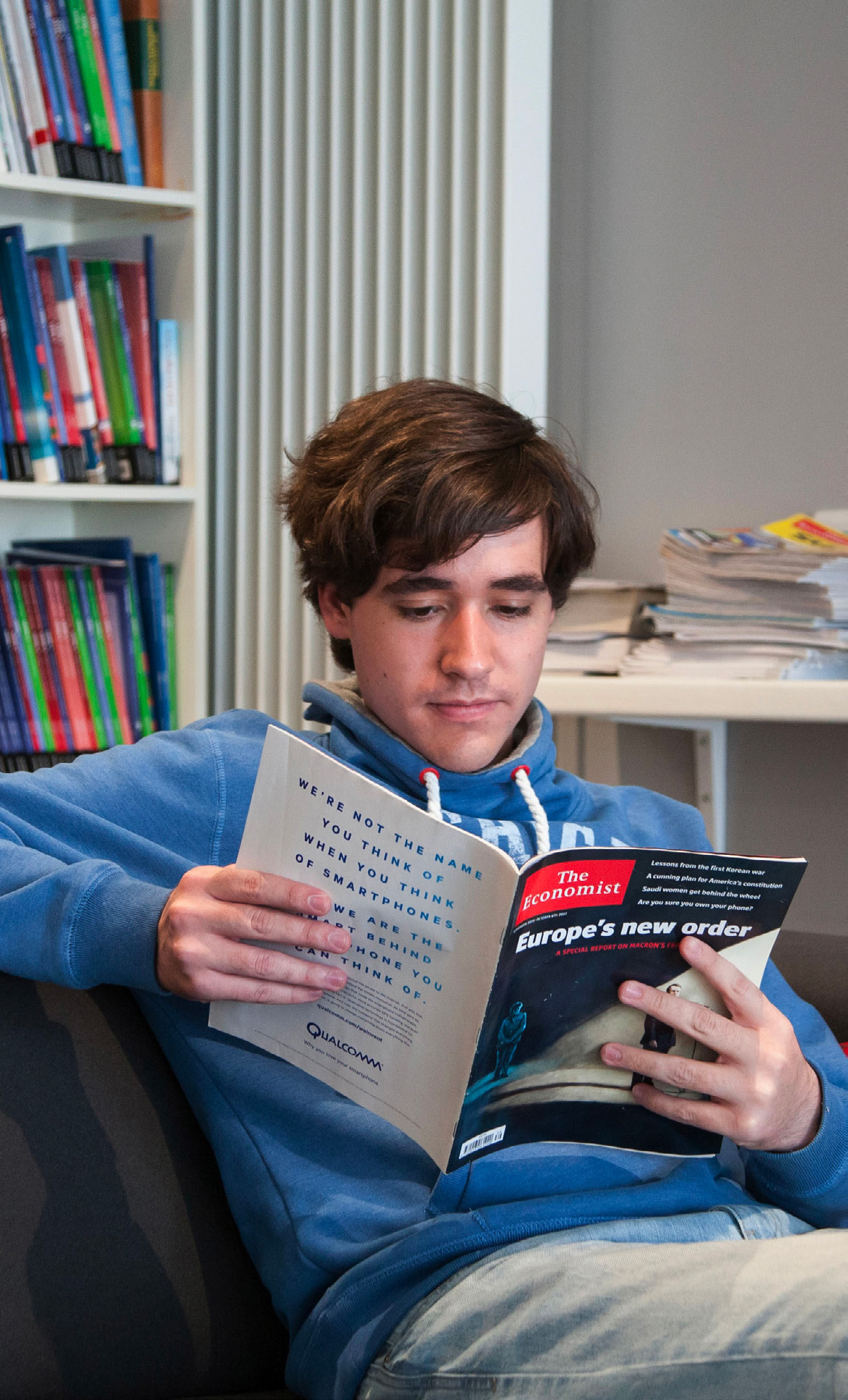
some big crazy thing. I weighed up options in Aberdeen, Dundee and Edinburgh, but al- ways preferred Glasgow, so was pleased to find an excellent course. Glasgow is probably the only metropolis in Scotland that has a real city feel. I like the subway and the grid system street plan almost gives it the essence of Americana. I also like the attitude- shoot from the hip, but genuinely friendly, if you’re not arrogant. It’s a very sociable place.
It’s also deservedly a Unesco City of Music. I’m a big music lover and it’s bursting with live music, from local pubs and cafes all the way up to huge arenas and everything in between. There’s stuff happening right here on the doorstep and not just rock. The Three Judges a few doors along do regular live jazz, the Lismore diagonally across the road has loads of folk players. There are numerous festivals and events, but music happens in Glasgow all year round, pretty much anywhere you can set up a band, or pick up a guitar. At the moment I’m into New York No Wave and even some contemporary classical. There’s not much you can’t find here in some shape or form.
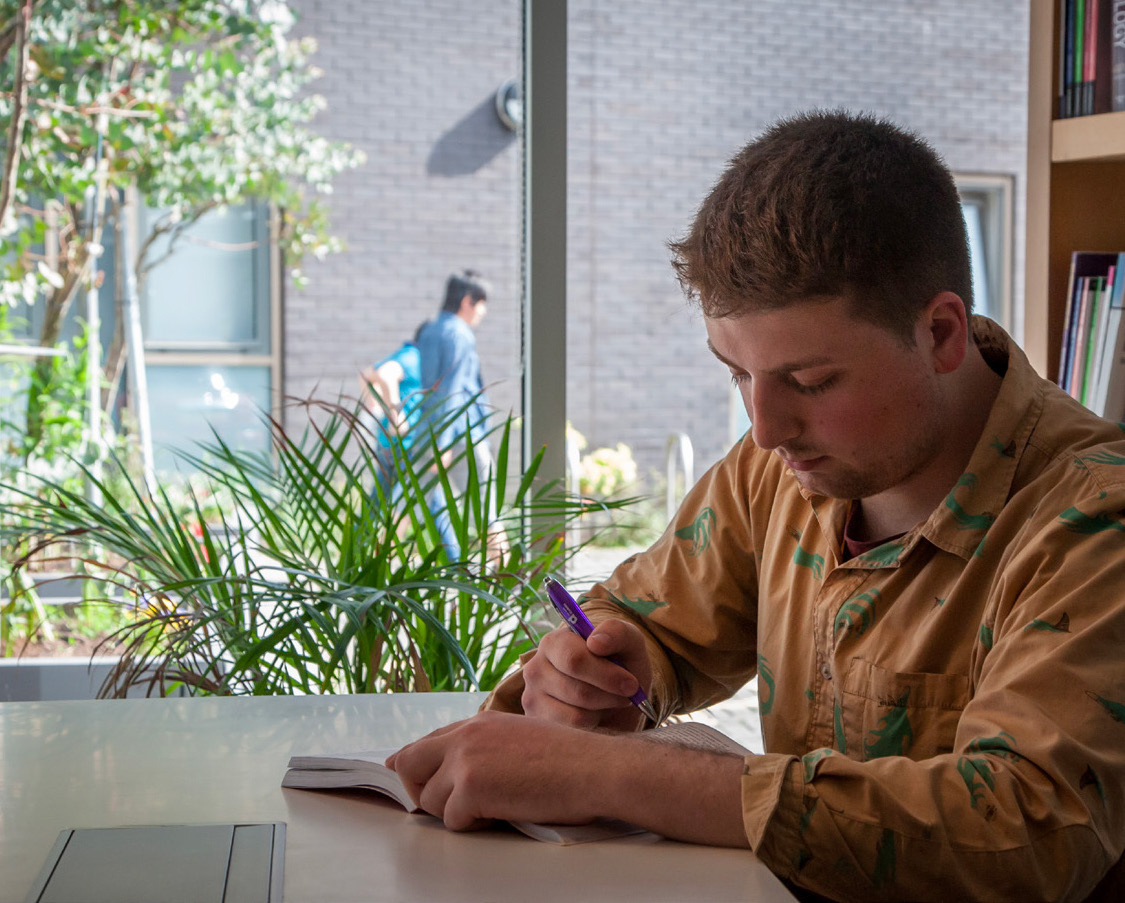
I found Hyndland House on an email list from the University. I’ve seen a lot of other halls and some do feel a bit like coffin rooms, lost in huge complexes
It’s nice and light here, not too big and totally part of Partick and the square. One of my flatmates, Maddie, works in Celino’s restaurant. Not much of a commute as it’s in the same building.
There’s a really sociable feeling in our flat. We’ve a five/four split, female to male, from India, Bangladesh, Finland, China and Greece. We sometimes do a big shared meal and movie nights at the weekend and ‘pre’s’ before going out. It’s a great kitchen and living room area. You can sit back, day or night and look down at the world below.
Everyone has their own time slots in our kitchen, like a self managing system. If a bit of a queue occurs, people are happy to watch TV or just wait around, interact and catch up on each other’s days.
I’ve long been fascinated by Social Science, enjoying books about politics, history and all that kind of stuff since childhood, so my degree seems like a natural fit and the environment I’m in is a huge cultural learning curve in itself.
I would like to go into the Civil Service and work in the Scottish Government. I may also do a post grad later on, but think I would like some job experience first.
Glasgow University
This is the first time I’ve lived abroad. I wanted to study law in the UK and Glasgow University is internationally high ranking. Hyndland House was recommended to me, as the best quality, location and value for money. I’m under pressure to learn a lot in a short space of time, so student accommodation makes sense, as it allows me to focus on my work when I need to and experience the city when I can, without unnecessary pressures.
When I do get free time, I particularly enjoy socialising in restaurants with friends, where we can eat well and soak up the atmosphere. I’m obviously very familiar with Thai food, but love trying new flavours from anywhere in the world. It certainly doesn’t need to be anything fancy, as long as it’s tasty. There are lots of great burger places about town and believe me, we’ve done our research.
I’d never cooked before I came to Glasgow, but after a few weeks I was in- spired by my flatmates when sharing the kitchen, so thought I should learn and I’ve really got into it. As well as the regular supermarkets there are plenty of local independent shops. Good fishmongers (very important for Asian people) butchers, grocers and specialist Asian shops, so I can get everything I need ingredient wise, for any kind of food I want to try and experiment with.
I also find it quite therapeutic to go to the common room and paint. It’s qui- etly sociable, so ideal for when I want to unwind a bit with friends from other flats, like ‘Pong.’ I painted miniatures back home, so found a shop in Glasgow where I can buy the castings, paints and brushes. I then try to make them live up to the best I’ve seen. I’ve had a great experience in Scotland, so decided to stay here for my next degree. After that I plan to settle back in Thailand.
Glasgow Hyndland House
Software Engineering Student Glasgow University
I’m from Tenerife, which is such a popular tourist destination that I constantly come across people who seem to know it better than I do and tell me about tiny villages, that I’ve never even heard of.
I grew up in Santa Cruz, the capital, in the north of the island. Climate wise, it’s a massive change coming from where I do. Some- how, even though the climate is different, the open character of Glaswegians is strangely similar to us Spaniards. Of course, here in the West End, it’s so cosmopolitan, you start exchanging ideas with people from all backgrounds. You know what they say, ‘People Make Glasgow’ and it’s actually true. My cousin was studying in Scotland before me and I saw that Glasgow University was pretty much at the top of the rankings for my course, so here I came. Another cousin is also here now, so coming to Scotland to study has evolved into a bit of a family thing.
I’d been living in Glasgow, so knew the area around the University. I’d seen Hyndland House on my wanderings and was really drawn to it. I was inspired by its modernity, particularly all the massive corner windows. I wanted to be in those rooms looking back out, so I came here to do a viewing and it lived up to my expectations. It’s absolutely stunning when you walk in and see a wall of windows, then the panoramic view of the gothic University tower, the park in the middle of the square and all the old sandstone buildings. You don’t feel removed from the world here. It’s like you’re in the centre of everything.
I actually love Glasgow. There’s something about it that just draws you in. I go for walks around the Clyde, past the BBC, the Hydro, under all the bridges, from the West End, to the East, through the city centre.
I really like the West End parks as well. Last winter Northern Europe had particularly cold weather. One day there was so much snow I decided to go for a walk in Kelvingrove Park. In hindsight this was not perhaps the best of ideas, as I came back looking like a snowman. We are also surrounded by breath- takingly beautiful countryside. You go from the biggest city in Scotland and in half an hour all you can see are lochs and mountains.

I come from a place that’s geographically Africa and is so near the equator there are no real seasons. Experiencing seasons was a bit of a shock at first. Before I moved here, I naively asked in every clothes shop in Santa Cruz for a really warm jacket for cold weather. They said, “Did you notice you’re in Tenerife in August?”
I really like to feel the seasons though and the way nature changes. If you want to go out into a beautiful winter wonderland, you just put on the right clothes and you’re fine. If it’s thirty degrees there’s only so much you can take off! I think really hot weather is nice for a month. After that you get fed up of it. I like it when it’s cold in the winter and I love walking in the snow. I might be a weird Spanish person.
I’m graduating in June and been offered a job as a software engineer in Lon- don. This degree has been very useful to me, though I’ll miss living in Glasgow. I knew I wanted to stay in the UK after my experiences here and at least I can easily hop on a train and visit.
Glasgow University has been good to me. I got a lot of support from the aca- demic staff. The staff in Hyndland House are excellent too. I don’t know how they do it, but if I tell them when my exams are, they somehow remember and check on how things are going. It really feels like they care. Building wise it speaks for itself. It’s got everything I need and more. I’m afraid I’m not much of a cook, but there are loads of good restaurants and cafes around offering good student deals. My friends and I have gone to some of them so often they know us by name.
It’s great having Celino’s right here. Really good value Italian food, you can taste is all freshly made. Now that it’s been really warm and sunny for the last month I’ve become addicted to their ice cream.
Corporate and Finance Law Student
Glasgow University
I’m also taking Law and wanted to study in the UK. A slightly different course to ‘Ong,’ but still related, so we study one of the four main disciplines together. I plan to eventually become a judge back in Thailand and you have to have at least two masters degrees to be considered. In the UK it’s possible to achieve this in less time, but with good quality education and globally respected qualifications.
I came to Scotland, as I love hiking and Scotland has great mountains and stunning countryside. Funnily enough, I sort of ended up in Glasgow by accident, as I thought I was going to Dundee, but my agent applied for Glasgow without me realising; as it was rated better for my course.
It’s all worked out very well though. As well as hiking, my other big passion is music, especially indie rock. I just love what’s been coming out of British cities and Glasgow has some really good bands and a great scene. It’s so welcoming too. The audiences are wonderful and really mixed. At last year’s TRNSMT Festival I found myself standing beside a couple who must have been over seventy and they were still jumping around. In Thailand most people stop taking an interest in rock music after they hit thirty but here people in their sixties and seventies are still jumping. That’s inspirational.
The last time I went to the ABC in Sauchiehall Street I was the only foreign person in a crowd of local fans. We didn’t know each other at all, but when the music started we were all jumping together, hugging and smiling, like a big family. I felt so welcomed I was really moved. That’s something I’ll always remember about Glasgow. That warm welcome.
It’s also quick and easy to take a train to other cities around the UK and see bands. I have to study hard but soak up as much music as I can. I love the culture here in general and enjoy Hyndland House, though everyone in my flat seems to be such a keen cook it sometimes takes a little while for me to get enough space to make my dinner. It’s ok though as I can socialise while I

Glasgow Hyndland House
wait. I found Hyndland House through just wandering around the West End. I saw it and I liked the look and feel of it.
As far as the hiking is concerned, I particularly like going up to Glencoe, with a group of hiker friends, who I’ve met here but come from all sorts of places. For a local hike I just take the local train from Partick out to Balloch and start hiking from Loch Lomond.
Glasgow Hyndland House
We use cookies to improve your experience on our site. By using our site, you consent to cookies.
Manage your cookie preferences below:
Essential cookies enable basic functions and are necessary for the proper function of the website.
These cookies are needed for adding comments on this website.